Blog
What Is a Surge Protector and How Does It Work?
Updated on Jun 2026
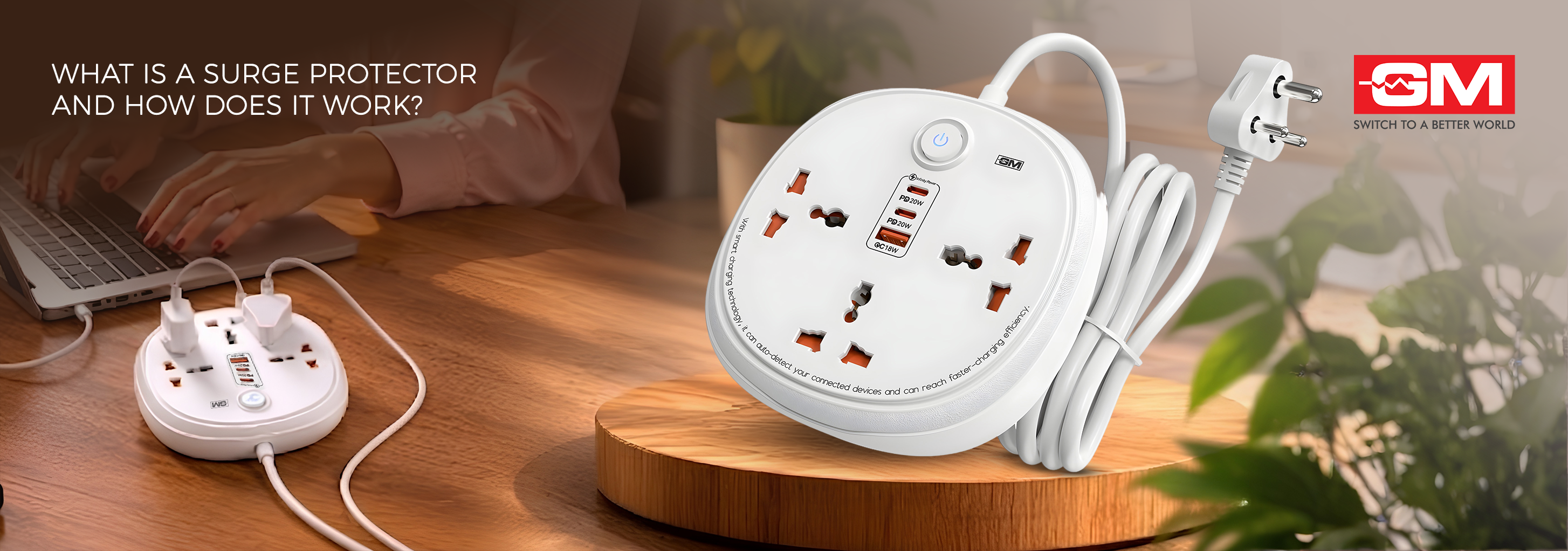
Imagine settling in to finish an important project when a sudden thunderstorm rolls in. A power spike races through the lines, and your laptop, television, and router shut down in an instant. Moments like these are exactly what is surge protector technology built to prevent. Many people are unsure what is surge protector equipment meant to do, when the answer is simple, it shields electronics from unpredictable power.
This guide explains, in plain language, how this small device forms your first line of defence.
Understanding the Basics: Defining the Technology
Many people assume every power strip protects their devices, but that is rarely true. A basic power strip simply adds more outlets to a single wall socket. It is an extension, nothing more, and does not block, absorb, or divert dangerous electricity.
A surge protector, by contrast, is engineered to stop harmful voltage from reaching your appliances. Surges can last less than a millisecond, yet that brief moment carries enough force to damage sensitive components.
The difference becomes clearer side by side:
Electricians call these units “surge protective devices”, or “SPDs”. Knowing the distinction helps you buy genuine protection, not a plain extension board.
The Core Mechanism: Understanding the Internal Components
So how does surge protector work once a spike arrives? The answer lies in a clever component hidden inside the casing.
At the heart of most units sits an MOV (Metal Oxide Varistor), which works like a pressure relief valve for electricity. Under normal conditions it stays inactive, letting standard voltage flow through without interference. The moment voltage rises beyond a safe threshold, the MOV reacts instantly.
Here is what happens during a surge:
-
The MOV senses the dangerous spike in voltage.
-
It diverts the excess electricity away from your devices and into the grounding wire.
-
Normal voltage continues to pass through, so your appliances keep running smoothly.
A quality unit also includes a thermal fuse. If repeated surges cause the MOV to overheat, this fuse cuts the power completely, helping prevent a fire risk. This is why internal build quality matters so much.
Daily Defence: Practical Applications in Your Home
It is easy to picture lightning as the main threat, but voltage spikes happen far more often than most people realise. Common causes include lightning, grid switching, and large appliances such as air conditioners or pumps turning on and off.
This is where the question of what does a surge protector do becomes interesting. The damage is not always dramatic. A single overnight spike can quietly weaken a laptop motherboard, causing failure weeks later and sometimes taking months of irreplaceable work files with it.
Not every home faces the same risk. You will benefit most from a surge protector if any of these apply:
-
Frequent power cuts or flickering lights.
-
Expensive electronics such as a gaming PC, console, or large smart television.
-
A work-from-home setup with laptops and important data.
-
Monsoon-related fluctuations and storm activity in your area.
A good voltage protection device tackles both threats at once: the rare catastrophic surge and the constant trickle of small fluctuations. This is where GM Modular Premium Spike Guards earn their place: fire-resistant housing answers the risk of an overheating unit, child-safety shutters guard every socket, and a clear indicator light shows at a glance that your devices are still covered.
During monsoon season especially, following electrical safety practices at home becomes even more important for protecting your devices.
A Buyer’s Checklist: Securing the Best Protection
Knowing what to look for in a surge protector turns a confusing purchase into a confident one. Run through this checklist before you buy:
-
Joule rating: The total energy the device can absorb before it fails. A higher rating generally means longer-lasting protection.
-
Clamping voltage: The voltage level at which the device activates and starts diverting electricity. A lower figure means the unit reacts sooner.
-
Indicator lights: Visual confirmation that the device is still guarding your electronics. Without one, you cannot tell whether protection has worn out.
-
Ports, spacing and extras: Enough outlets, generous spacing for bulky adapters, and useful additions such as built-in USB charging.
Low-cost strips often skip these essentials to cut corners. GM Modular Smart Power Strips tick every box, with well-spaced outlets, integrated USB charging, robust Joule ratings, and warranty-backed reliability.
Why GM Modular Surge Protection Stands Apart
Not all surge protectors are built to the same standard. Many uncertified, low-cost units cut corners you cannot see: flammable housing, no thermal fuse, a missing indicator light, or a Joule rating too low to survive a serious spike. These are the shortcuts that fail when a real surge arrives.
GM Modular takes the opposite approach, pairing fire-retardant housing and built-in thermal safeguards with quality components and proper certification. The result is a unit engineered for India’s unpredictable grid, built to keep guarding your electronics long after a bargain strip would have quietly stopped working.
Crucial Usage and Maintenance Rules
Even the best device can fail if used carelessly. Follow these safety rules to keep your home protected:
-
Never “daisy-chain” units by plugging one extension into another, as this overloads the circuit and creates a serious fire hazard.
-
Avoid plugging high-capacity appliances such as refrigerators, geysers, or heaters into these strips; they draw more current than the unit is designed to handle.
-
Replace the unit immediately if the indicator light goes out, as this signals the internal defence has worn away.
Always turn off the main power supply before attempting any electrical work. If unsure, consult a qualified electrician.
A surge protector is a small investment that prevents far larger replacement costs later. Replacing a gaming PC, an office laptop, or a smart television can run into lakhs of rupees, while a quality protector costs only a fraction of that and works silently every second your devices stay plugged in. The best time to act is before the next unexpected surge, not after the damage. Explore GM Modular’s premium range of spike guards and power strips today.
Frequently Asked Questions
1. Exactly what is surge protector technology designed to stop?
It is designed to stop sudden voltage spikes, whether from lightning or grid fluctuations, from reaching and damaging your connected electronics.
2. Is a standard power strip the same as what is surge protective device technology?
No. A standard power strip only adds extra outlets, whereas a true protective device contains internal components, such as an MOV, that actively block excess voltage.
3. In simple terms, how does surge protector work during a storm?
When a storm causes a voltage spike, the device detects the surge and uses an MOV to divert the excess electricity straight into the ground wire.
4. Besides lightning, what does a surge protector do for daily household use?
It protects sensitive microchips inside TVs, computers, and routers from small, daily fluctuations caused by large appliances switching on and off.
5. What is surge protection device lifespan, and how long does one usually last?
A surge protector does not last forever. It typically needs replacing every three to five years, or sooner if the protection indicator light turns off.
Related Blogs
Bladeless Fan Buying Guide: 10 Checks | GM Modular
Bladeless Fan Buying Guide: 10 Things to Check Before You Buy A bladeless fan looks like the obvious upgrade. No spinning blades, a slim tower, a quiet hum, and a price that hints it must be the better choice. But the word “bladeless” on
Read More
What Is a GaN Charger? A Simple Guide
What Is a GaN Charger? Everything You Need to Know You have probably used gallium nitride for years without knowing it. Before it reached the charger on your wall, this material lit up the first white LEDs, powered blue lasers, and read the discs in
Read More
GM Artic Air 1: 3-in-1 Bladeless Tower Fan
Why the GM Artic Air 1 Is the Ultimate 3-in-1 Appliance for Every Season Picture one slim tower in the corner of your living room. In May, it cools you through a brutal afternoon. In August, it clears the damp, stale air the monsoon leaves beh
Read More
Wireless Charging vs Wired Charging: Which Is Faster?
Wireless Charging vs Wired Charging: Which Is Faster? If your phone is at 10% and you have twenty minutes before heading out, which charger should you grab: the cable or the pad? Wireless charging is everywhere now, yet most of us still reach for a
Read More