Blog
Wireless Charging vs Wired Charging: Which Is Faster?
Updated on Jul 2026
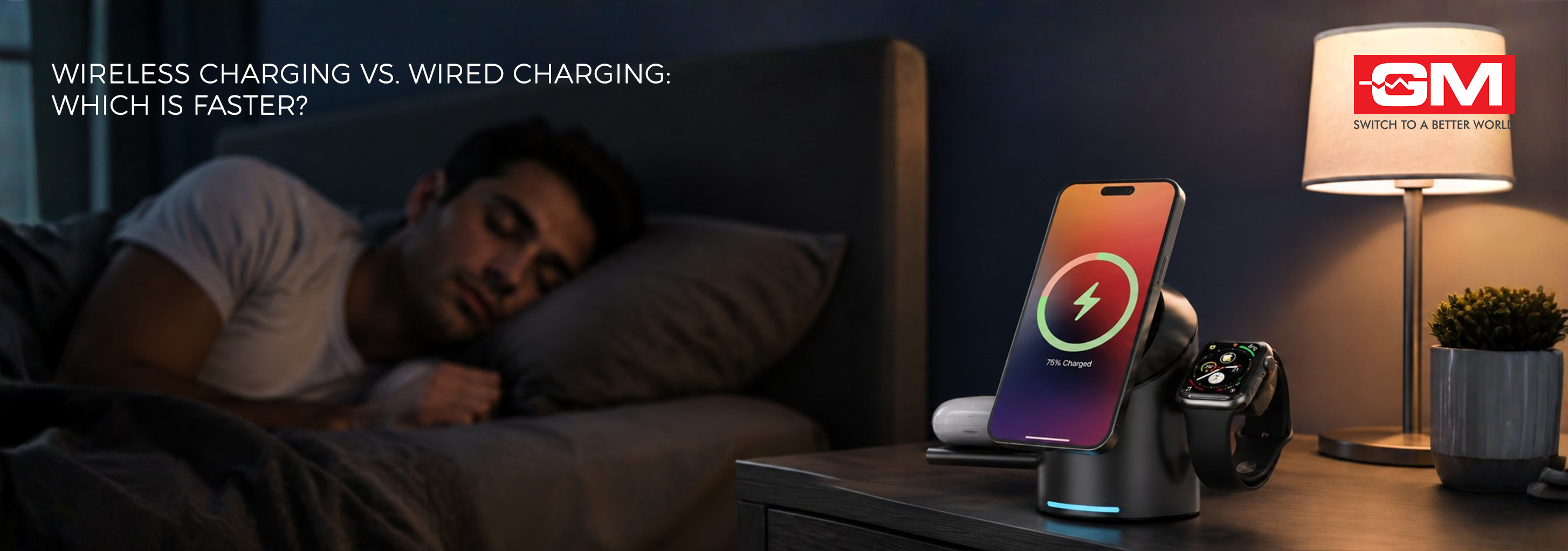
Wireless Charging vs Wired Charging: Which Is Faster?
If your phone is at 10% and you have twenty minutes before heading out, which charger should you grab: the cable or the pad? Wireless charging is everywhere now, yet most of us still reach for a cable when the battery runs low. There’s a good reason for that habit. Wired charging is faster, but the full answer is more useful than a one-word verdict, so let’s look at how the two really compare in the wireless-charging vs wired-charging debate.
How Wired and Wireless Charging Actually Work
Wired charging is simple. A cable, usually USB Type-C, creates a direct physical link between the charger and your device, so power flows straight through with very little lost along the way.
Wireless charging works differently. It uses electromagnetic induction, in which a transmitting coil inside the pad creates a magnetic field, and a receiving coil inside your phone converts that field back into power. You place the device down and charging begins, with no cable to plug in.
The Qi2 standard, introduced in 2023, added magnetic alignment. This snaps your phone into the right position over the coil, which cuts wasted energy and standardises 15W wireless charging across brands like Apple, Samsung, and Google.
Wireless Charging vs Wired Charging: Which Is Faster?
For raw speed, wired charging wins. A direct cable connection can be roughly two to four times faster than wireless, depending on the charger.
Here’s a real example. On a phone that supports 45W fast charging, a 45W wired charger can reach 50% in about 22 minutes, while a Qi2 15W pad takes closer to 42 minutes for the same top-up. Even a basic 20W wired charger usually outpaces the fastest mainstream wireless charging. Actual times vary with your phone model, battery size, charging protocol, and even room temperature, so treat these as a guide rather than a fixed rule.
Wireless is closing the gap, though. The newer Qi2.2 standard (also called Qi2 25W) raises the ceiling to 25W, reaching about 50% in roughly 30 minutes under good conditions, against 45 to 50 minutes at 15W. For now, those 25W speeds apply only to the latest phones, such as recent iPhones and select 2026 Android flagships, so most devices still charge at 15W. Wired still leads, but not by as much as it used to.
The Nuance: Quick Top-Up vs Overnight Charge
Here’s where the honest answer gets interesting. The speed difference matters most for a quick top-up, when you have twenty minutes before leaving home and every minute counts. There, wired is the clear pick.
For an overnight charge, the picture flips. A full 0 to 100% wireless charge tends to land at a bit over two hours across most wireless power levels, because heat and built-in battery protection slow the final stretch no matter the wattage.
So if your phone sits on a pad all night, you’ll wake up to a full battery either way. The faster method only wins when you’re actually watching the clock.
Efficiency, Heat, and Battery Health
Speed isn’t the only difference. Wired charging is more efficient, delivering roughly 85 to 95% of the drawn energy to your battery. Wireless sits closer to 60 to 70%, with a fair share lost as heat.
That heat matters. At 15W, wireless charging can push a phone to around 38 to 42 degrees Celsius, while wired charging tends to run cooler, because most of the conversion heat stays in the charger rather than the phone. Battery wear speeds up at higher temperatures, so cooler charging is gentler over the long run.
For everyday use, the difference is modest, and certified Qi2 chargers with good magnetic alignment help narrow it. Actual energy savings and charging performance may vary based on your device, charger, and usage conditions.
What This Means for Indian Homes
India adds a few practical wrinkles. Much of the country stays warm and humid, so phones already run hot, and the extra warmth from wireless charging is worth remembering during peak summer.
Voltage fluctuations are common too, which makes safety features like overcurrent and overheat protection genuinely useful in whichever charger you pick. And if you need to charge a laptop, wired stays the only real option, since no mainstream wireless standard delivers the higher wattage laptops need.
Also Read: Best GM Modular Extension Boards for Safe & Convenient Power Usage
Choosing the Right Charging Setup
For most people, the smartest approach is to use both. Keep a wired charger for fast top-ups when time is tight, and a wireless pad for tidy, drop-and-go charging at your desk or bedside.
If you want a wireless option suited to Indian conditions, GM Modular offers the G+ Arc Qi2 3-in-1 Wireless Charger. It uses the Qi2 standard with magnetic snap-on alignment, charges up to 15W, and powers your phone, earbuds, and smartwatch together. A built-in retractable cable keeps the setup neat, while overcurrent and overheat protection add a layer of safety. Always use charging products according to the manufacturer’s guidelines for safe operation.
So, which is faster? Wired wins for quick top-ups, while wireless nearly matches it over a full night’s charge. The right choice comes down to how you actually charge, not just the raw numbers. For a convenient, safety-focused wireless option, GM Modular’s Qi2 range is worth a look as you build a charging setup that fits your routine.
Frequently Asked Questions
1. How fast is wireless charging compared to wired?
Wireless charging is typically two to four times slower than wired for a quick top-up. On a compatible phone, a 45W wired charger can reach 50% in about 22 minutes, while a Qi2 15W wireless pad takes closer to 42 minutes. Actual speeds depend on your device and charger.
2. Is wired charging faster than wireless in everyday use?
For speed, yes. Wired generally leads, especially for fast top-ups. For a full overnight charge, though, the practical gap nearly disappears, since wireless usually completes 0 to 100% in a bit over two hours regardless of the power level.
3. Is a wireless charger better than a wired one for daily use?
Neither is simply better; each suits different needs. Wired offers faster, more efficient charging, while wireless offers convenience and a tidy, cable-free setup. Many people use both, matching the method to the moment.
4. Why is wireless charging better than wired for some users?
Wireless charging is more convenient, with no plugging or unplugging, less wear on your charging port, and a cleaner desk or bedside. It suits casual top-ups and overnight charging, where ease matters more than speed.
5. What makes GM Modular’s wireless charger a good choice?
The GM Modular G+ Arc Qi2 3-in-1 Wireless Charger uses Qi2 magnetic alignment for stable charging up to 15W, powers three devices at once, and includes overcurrent and overheat protection. That makes it a safe, practical option for everyday use.
Related Blogs
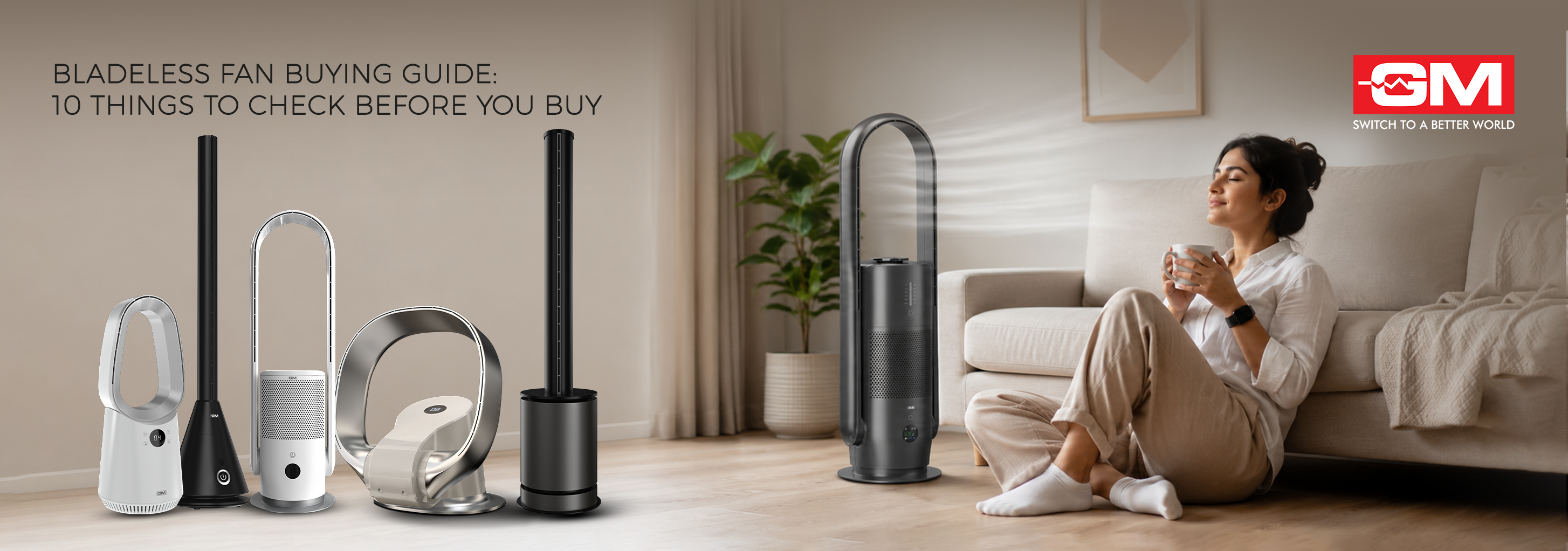
Bladeless Fan Buying Guide: 10 Checks | GM Modular
Bladeless Fan Buying Guide: 10 Things to Check Before You Buy A bladeless fan looks like the obvious upgrade. No spinning blades, a slim tower, a quiet hum, and a price that hints it must be the better choice. But the word “bladeless” on
Read More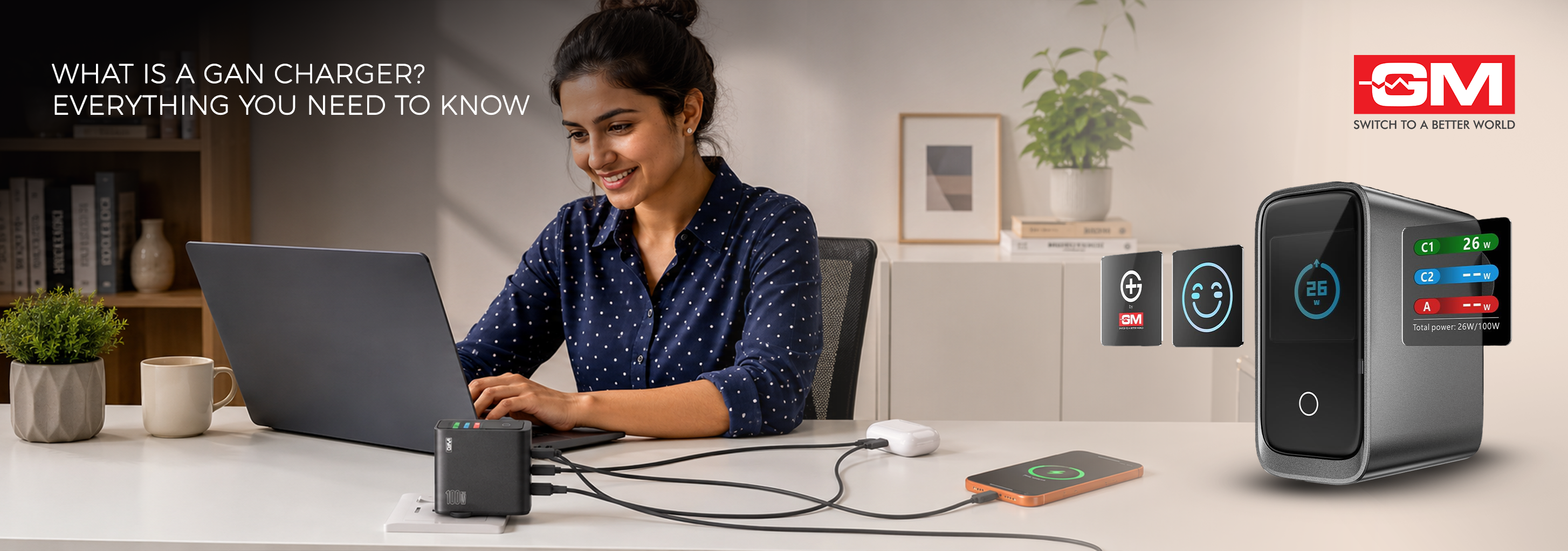
What Is a GaN Charger? A Simple Guide
What Is a GaN Charger? Everything You Need to Know You have probably used gallium nitride for years without knowing it. Before it reached the charger on your wall, this material lit up the first white LEDs, powered blue lasers, and read the discs in
Read More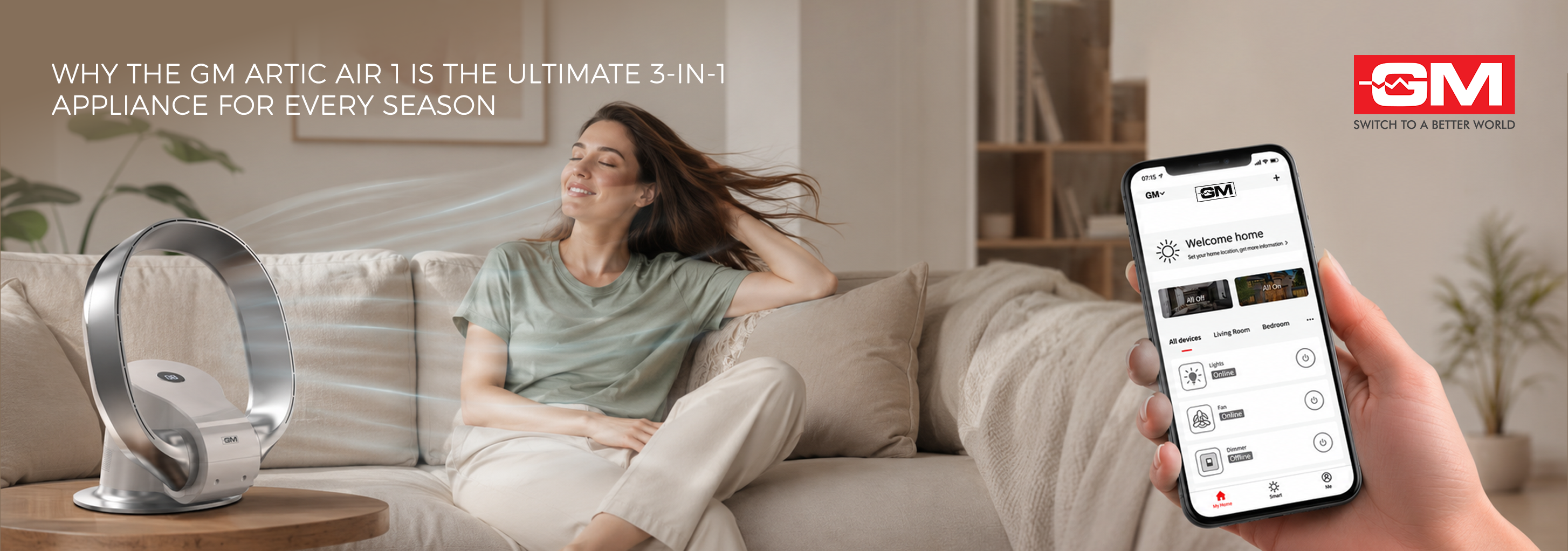
GM Artic Air 1: 3-in-1 Bladeless Tower Fan
Why the GM Artic Air 1 Is the Ultimate 3-in-1 Appliance for Every Season Picture one slim tower in the corner of your living room. In May, it cools you through a brutal afternoon. In August, it clears the damp, stale air the monsoon leaves beh
Read More
Magnetic Charging Cables Explained
Magnetic Charging Cables Explained: How They Work and Why They’re So Convenient We’ve all felt it. The cable that only charges at one odd angle, the frayed neck near the plug, and the port that no longer grips the connector properly. Mos
Read More