Blog
5 Things to Consider Before Buying Submersible Cables
Updated on Sep 2024
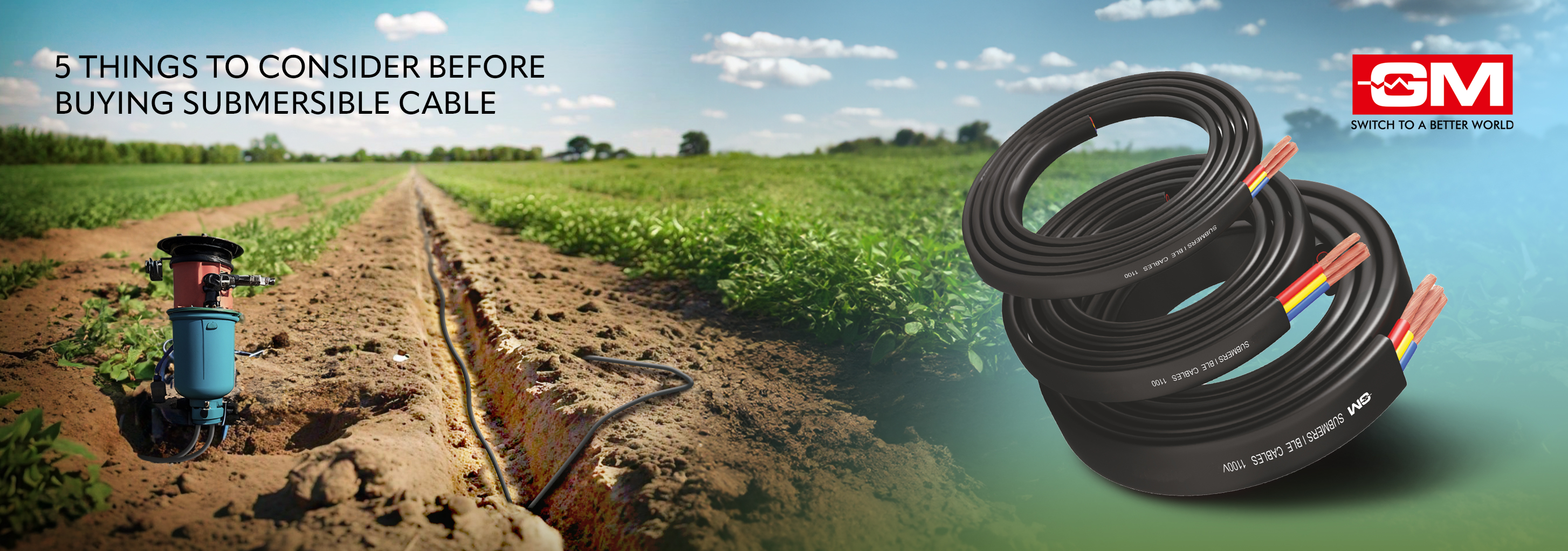
Ever wondered how water is extracted from the reservoirs and transported directly to the farmland for agriculture? Or how does the water supply run smoothly into your residential communities? It is through the presence of electrical submersible pumps that these activities take place. Industries, residential communities, and agricultural lands require a submersible underwater pump for optimum water supply. These pumps, however, need specialised electrical cables, known as submersible cables, which are designed to power these pumps. If you need one for your property and are wondering how to make the right choice, consider this your GM Modular guide to purchasing a submersible pump cable.
What Makes Submersible Pump Cables a Good Choice for Your Property?
Submersible pumps have various advantages, with their efficiency ranking at the top. This is significantly backed by the power supply through the submersible cables. Let’s discover a few characteristics of these pump cables and understand why they make a good choice.
● High-pressure resistance
● Chemical resistance
● Abrasion resistance
● Oil resistance
● UV resistance
● Corrosion resistance
● Temperature resistance
● Flexibility
● Durability
● Waterproof
● Non-toxic, making them safe for drinking water applications
Making the Right Choice: 5 Things to Consider Before Buying Submersible Cable
All of the aforementioned qualities of a submersible pump cable make it an exceptional choice for a variety of applications. These include irrigation systems, food-preserving systems, mining facilities, water chlorine injection systems, swimming pools, aquariums, and more. However, you will only be able to make the most of its benefits and enjoy its efficiency if you have made the right choice. Here are 5 factors you must consider to make an informed decision when buying a submersible cable:
1. Consider the Conductor Area
The conductor refers to the wire that carries electrical current, playing a crucial role in a cable's performance. Ideally, a larger conductor area will have lower resistance to the cable. This allows the cable to handle higher currents without overheating or losing power. Moreover, a larger conductor area increases the cable's capacity for power transmission, enabling it to deliver power over longer distances with minimal loss.
The material and quality of the conductor can significantly influence a cable's electrical resistance, current-carrying capacity, and overall performance. Copper is the most commonly used material for submersible cables, thanks to its high conductivity, corrosion resistance, and durability. However, certain applications may demand alternative materials like aluminium or speciality alloys. Note that using low-quality conductors can lead to signal degradation, electrical interference, or even equipment failure. In contrast, high-quality conductors ensure optimal electrical performance and reliability, even in challenging underwater environments.
3. Look for Suitable Insulation Materials
Selecting the right insulation material for submersible cables is crucial for ensuring optimal performance and durability in harsh underwater environments. The insulation of the cable you choose must be capable enough to withstand high pressures and extreme temperatures. It must also endure exposure to seawater, salt, and other corrosive substances. Choosing an insulation material that suits your requirements and withstands the adversities makes it an ideal choice. At GM Modular, you can find specially designed GM Submersible PVC wires for your application. With an outer cover made using a special grade of PVC, these are insulated and suitable to withstand harsh conditions.
4. Understand the Voltage Rating
This factor is essential to ensuring a safe and reliable operation of the cable. A “too low” voltage rating can cause cable failure, overheating, equipment damage, power loss, and even fire hazards. An extremely high voltage rating, on the contrary, can cause insulation breakdown, electrical arcing, and other hazards. Additionally, you must know that the voltage rating impacts the cable's electrical performance, particularly over long distances or in high-current applications. Selecting a cable with a higher voltage rating would be your best bet, as it can reduce power loss and maintain optimal electrical transmission. This will further result in improved equipment performance and energy efficiency.
5. Check the Sheathing of the Submersible Cable
This crucial component protects the cable and its conductors from harsh underwater conditions. It acts as a barrier against water, chemicals, and other elements that could damage the cable. This damage to the cable could also potentially result in equipment failure or even safety hazards. This is when the sheathing plays a key role in preserving the cable's electrical properties and preventing current leakage. The key is to understand that if the sheathing is compromised, water or other liquids can seep into the cable, causing a short circuit and resulting in equipment damage or failure.
These factors are all important when choosing a submersible cable for your property. Regardless of whether you wish to invest in a submersible pump cable for the irrigation system on your farm, an aquarium inside your home, or for industrial applications, making the right choice is paramount. At GM Modular, you are promised the quality and efficiency of a submersible cable at its best. So, look no further and buy yours at the best submersible cable price online.
Related Blogs
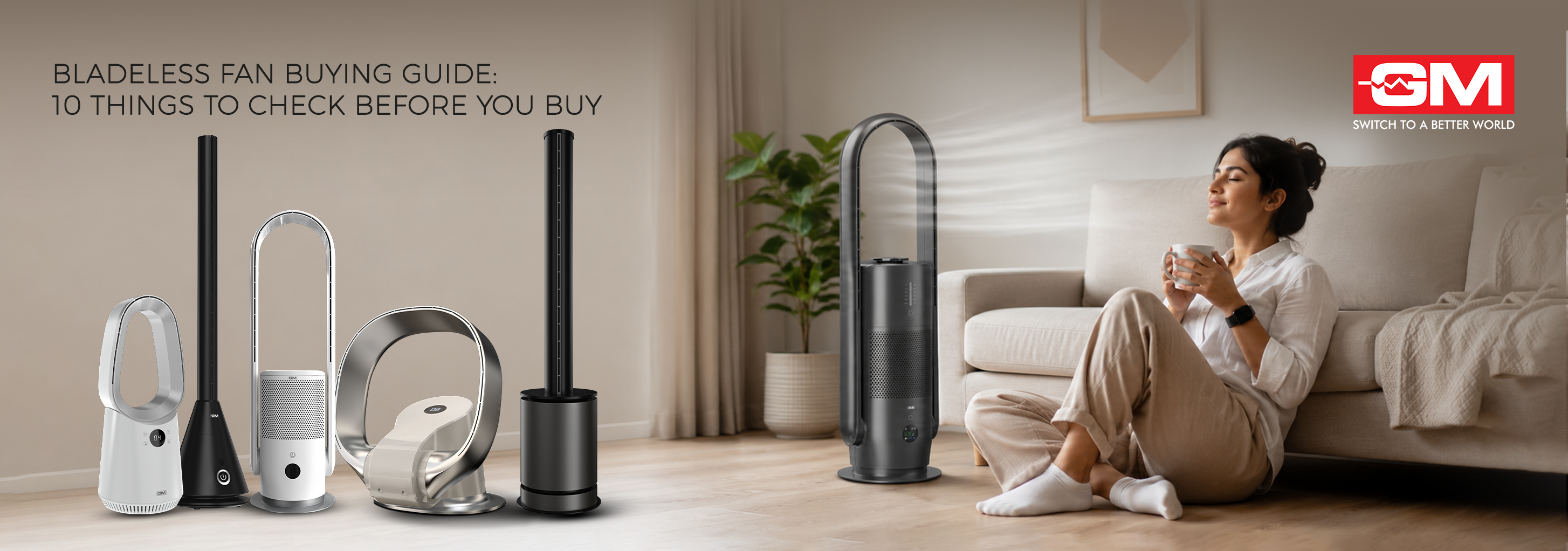
Bladeless Fan Buying Guide: 10 Checks | GM Modular
Bladeless Fan Buying Guide: 10 Things to Check Before You Buy A bladeless fan looks like the obvious upgrade. No spinning blades, a slim tower, a quiet hum, and a price that hints it must be the better choice. But the word “bladeless” on
Read More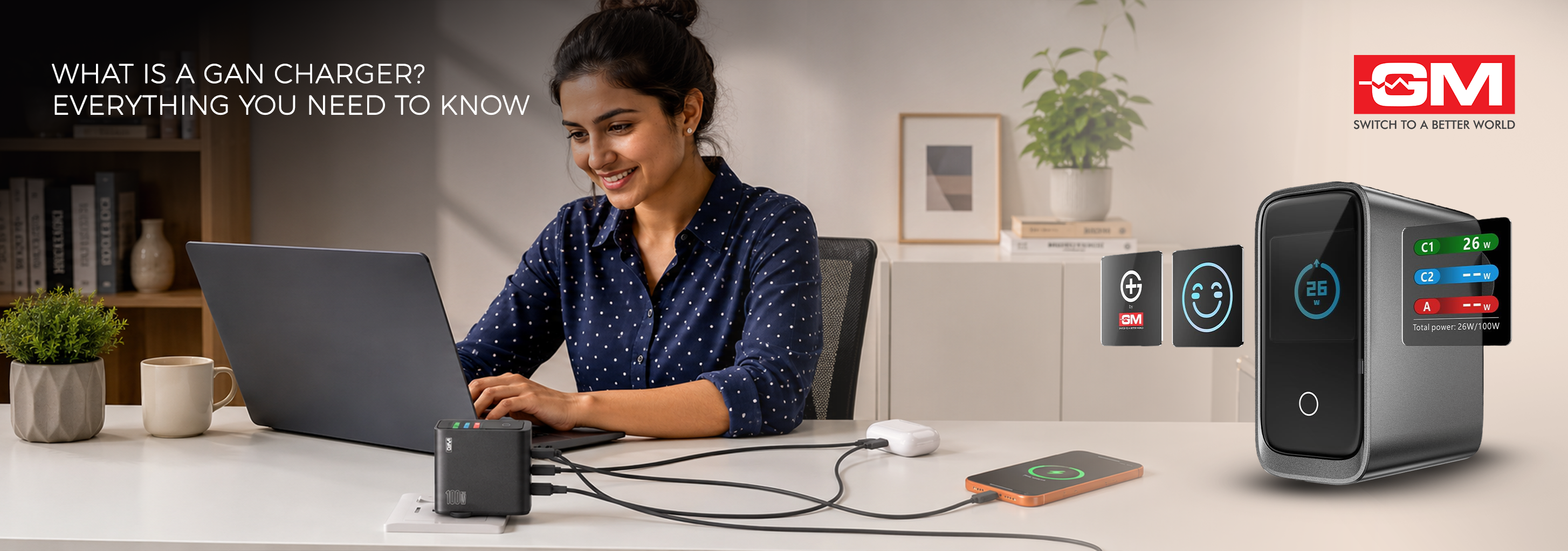
What Is a GaN Charger? A Simple Guide
What Is a GaN Charger? Everything You Need to Know You have probably used gallium nitride for years without knowing it. Before it reached the charger on your wall, this material lit up the first white LEDs, powered blue lasers, and read the discs in
Read More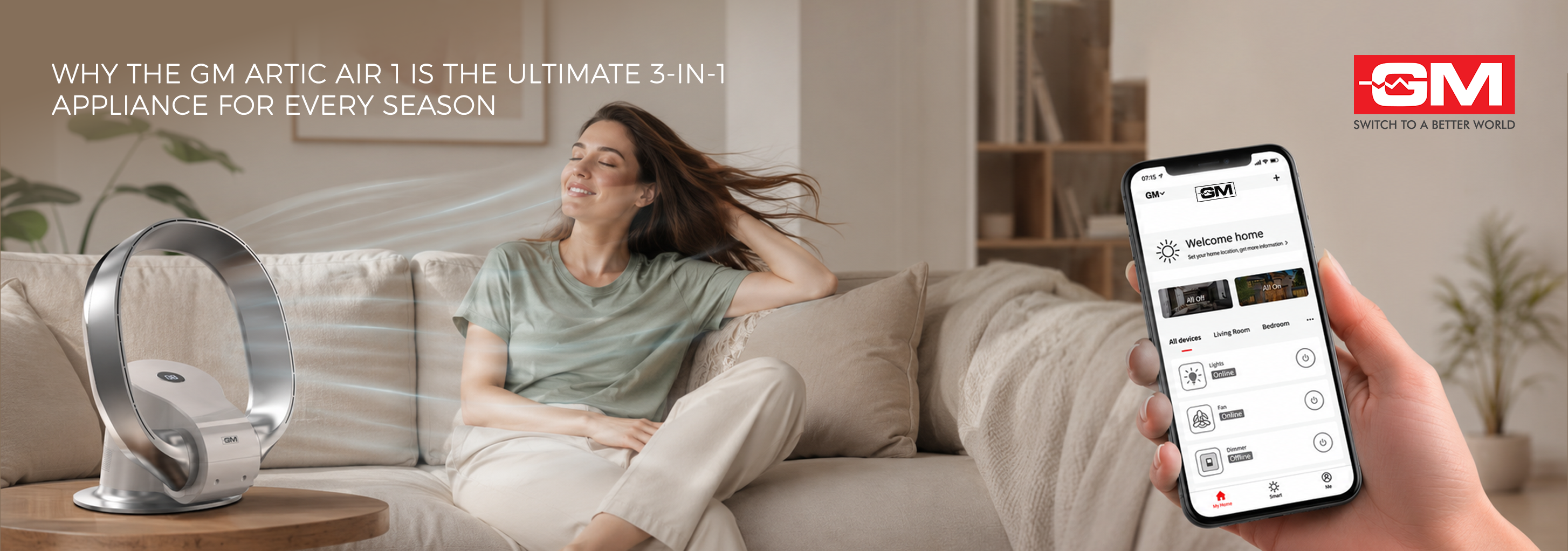
GM Artic Air 1: 3-in-1 Bladeless Tower Fan
Why the GM Artic Air 1 Is the Ultimate 3-in-1 Appliance for Every Season Picture one slim tower in the corner of your living room. In May, it cools you through a brutal afternoon. In August, it clears the damp, stale air the monsoon leaves beh
Read More
Wireless Charging vs Wired Charging: Which Is Faster?
Wireless Charging vs Wired Charging: Which Is Faster? If your phone is at 10% and you have twenty minutes before heading out, which charger should you grab: the cable or the pad? Wireless charging is everywhere now, yet most of us still reach for a
Read More