Blog
Over-Ear vs On-Ear Headphones: Know the Difference
Updated on Jul 2026
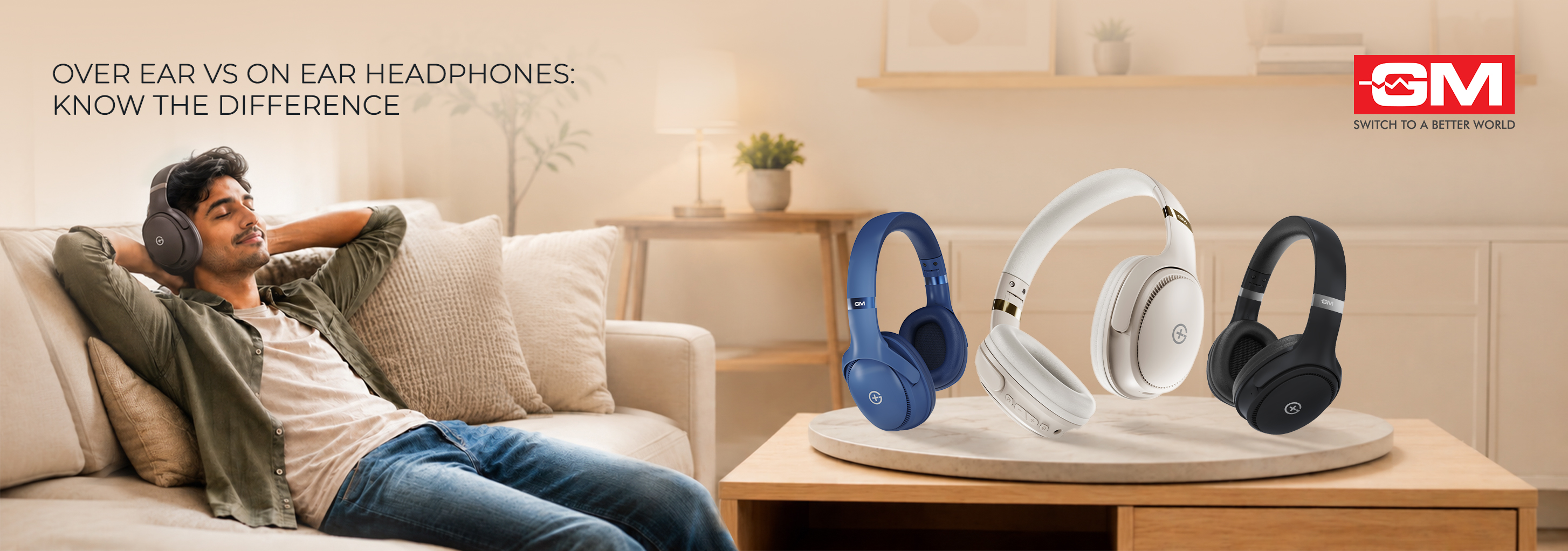
Over-Ear vs On-Ear Headphones: Know the Difference
You're buying a new pair of headphones. One looks bigger and promises better sound. The other is lighter and easier to carry. Five minutes later you're still comparing specifications, wondering which one is actually right for you. That's exactly where the over ear vs on ear headphones debate begins. You'll also see it written as on ear headphones vs over ear headphones, or over the ear headphones vs on the ear headphones, but the core choice stays the same. It isn't really about which style wins on paper. It's about which one fits the way you actually listen, so here's how to tell them apart before you buy.
What Are Over-Ear Headphones?
So, what are over ear headphones? Over-ear headphones, also called circumaural (around-the-ear) headphones, have large earcups that fully enclose your ears. The padded cushions rest against the sides of your head rather than pressing on the ears.
This bigger build brings a few natural perks. Larger earcups have room for larger drivers (the small speakers inside that produce the sound), so they can reproduce a wider range of frequencies and deeper bass. The complete seal around your ear also shuts out more outside noise. The catch is size: over-ear models are bulkier and harder to slip into a pocket.
What Are On-Ear Headphones?
So, what are on ear headphones? On-ear headphones, known as supra-aural (on-the-ear) headphones, sit directly on your ears without covering them fully. The earcups are smaller and lighter, which makes them a favourite for people who are often on the move.
Because they rest on the ear instead of around it, on-ear headphones let in more outside sound. That’s a drawback in noisy places, but it keeps you aware of your surroundings, which helps in traffic. The lighter build is easy to carry. If you wear glasses, on-ear pairs also tend to interfere less, since they don’t press the frame arms into the sides of your head the way a tight over-ear seal can. The trade-off is that the cushions sit on your ears, and that can start to feel uncomfortable after a long stretch.
Over-Ear vs On-Ear Headphones: The Key Differences
The difference between on and over ear headphones comes down to a handful of practical factors. Put side by side, here’s how they compare.
Sound: Over-ear headphones generally give a fuller, more immersive sound, thanks to their larger drivers and sealed fit. On-ear headphones still sound good, but the audio feels more direct and less enveloping.
Comfort: Over-ear cushions spread pressure around the ear, which many people find easier over long sessions. On-ear pads press on the ear cartilage, so they can start to ache after about an hour. Spectacle-wearers often feel this sooner, as the frame arms add to the pressure.
Heat: This is the factor most guides skip. The full seal of over-ear headphones traps warmth, so your ears heat up faster. On-ear pairs stay cooler because air still moves around your ears.
Portability: On-ear headphones are lighter and more compact, so they drop into a bag with ease. Over-ear models are larger and better suited to staying at home or your desk.
Noise isolation: The over-ear seal passively blocks more outside noise, which also gives noise-cancelling versions a head start. On-ear designs isolate less by nature.
Also Read: How to Choose the Best Speakers for Your Home Audio Setup
What About Noise Cancellation?
Noise isolation comes in two forms. Passive isolation is physical: the earcups form a seal that blocks outside sound, and over-ear designs do this best by covering the whole ear. Active Noise Cancellation (ANC) goes further, using microphones to detect ambient sound and produce an opposing signal that cancels it out.
Over-ear headphones make the stronger base for ANC, since their seal already shuts out a good deal of noise before the electronics step in. Not every pair includes ANC, so check the specification if a quiet commute matters to you. For home listening or short trips, a good passive seal is often enough.
Which Is Better for Indian Homes and Lifestyles?
So which is better over ear or on ear headphones? There’s no single winner, because the right pick depends on where and how long you wear your headphones. India’s climate and daily routines nudge the decision in useful ways.
If you spend hours on work-from-home video calls, over-ear headphones tend to be the kinder choice. The cushioned fit stays comfortable across a long day, and the larger frame leaves room for a clear microphone, which keeps your voice crisp through back-to-back meetings. For a noisy local-train or metro commute, weigh the trade-off: over-ear models isolate better on a loud platform, while on-ear pairs leave you aware enough to catch announcements. In peak summer the heat factor counts for more, so if warm ears bother you, lighter on-ear designs can suit short bursts.
For an affordable over-ear pair built for long Indian listening sessions, GM Modular offers the G+ Headphones BT 5.3 from its Audio Collection. They use 40mm drivers tuned for deep bass, run on Bluetooth 5.3 with dual pairing, and give up to 70 hours of playback (at 60% volume). An IPX4 splash-resistant rating helps against sweat and light rain, a built-in mic handles calls, and a 3.5mm AUX port covers wired use. Currently around Rs. 1,849, they’re a practical way into over-ear sound.
How to Choose the Right Pair for You
The quickest way to decide is to match the headphones to your day rather than chase specs.
-
Choose over-ear if you want immersive sound, long comfortable sessions, stronger noise isolation, and clearer calls at home or your desk.
-
Choose on-ear if you want a light, compact pair for short commutes and casual listening, and you like staying aware of your surroundings.
Whichever you pick, look after your hearing. The common advice is to keep the volume under 60% of maximum and take regular breaks during long sessions. GM Modular’s G+ range is designed for comfortable over-ear wear, which makes those breaks easy to stretch out.
The choice between over-ear and on-ear headphones rarely comes down to a spec-sheet winner. It comes down to your routine. Immersive comfort at home points to over-ear; light portability on the move points to on-ear. Factor in India’s heat, your daily calls, and your commute, and the right style usually becomes obvious. If over-ear suits you, GM Modular’s G+ Headphones are a comfortable, affordable place to start.
Frequently Asked Questions
1. What is the main difference between over-ear and on-ear headphones?
Over-ear headphones have larger earcups that fully enclose your ears, while on-ear headphones rest directly on them. This one difference in fit shapes their sound, comfort, heat, portability, and noise isolation.
2. Which is better, over-ear or on-ear headphones?
Neither is better for everyone. Over-ear headphones suit immersive sound and long sessions at home, while on-ear pairs suit lightweight portability and short commutes. The right choice depends on where and how long you listen.
3. Do over-ear headphones have better noise cancellation?
Generally, yes. Their seal blocks more outside noise on its own, which gives Active Noise Cancellation a stronger starting point. Not every pair includes ANC, so check the specification if a quiet commute is your priority.
4. Are on-ear headphones better if I wear glasses?
Often, yes. On-ear pairs press less on the frame arms of your glasses than a tight over-ear seal can, which many spectacle-wearers find more comfortable. Soft, well-cushioned over-ear pads can also work well, so fit still matters most.
5. What over-ear headphones does GM Modular offer?
GM Modular offers the G+ Headphones BT 5.3, an over-ear pair with 40mm drivers, Bluetooth 5.3, dual pairing, and up to 70 hours of playback. They include a built-in microphone, an IPX4 rating, and a wired AUX option, priced at around Rs. 1,849.
Related Blogs
Bladeless Fan Buying Guide: 10 Checks | GM Modular
Bladeless Fan Buying Guide: 10 Things to Check Before You Buy A bladeless fan looks like the obvious upgrade. No spinning blades, a slim tower, a quiet hum, and a price that hints it must be the better choice. But the word “bladeless” on
Read More
What Is a GaN Charger? A Simple Guide
What Is a GaN Charger? Everything You Need to Know You have probably used gallium nitride for years without knowing it. Before it reached the charger on your wall, this material lit up the first white LEDs, powered blue lasers, and read the discs in
Read More
GM Artic Air 1: 3-in-1 Bladeless Tower Fan
Why the GM Artic Air 1 Is the Ultimate 3-in-1 Appliance for Every Season Picture one slim tower in the corner of your living room. In May, it cools you through a brutal afternoon. In August, it clears the damp, stale air the monsoon leaves beh
Read More
Wireless Charging vs Wired Charging: Which Is Faster?
Wireless Charging vs Wired Charging: Which Is Faster? If your phone is at 10% and you have twenty minutes before heading out, which charger should you grab: the cable or the pad? Wireless charging is everywhere now, yet most of us still reach for a
Read More