Blog
How Does a Steam Iron Work? Understanding the Technology
Updated on Feb 2026
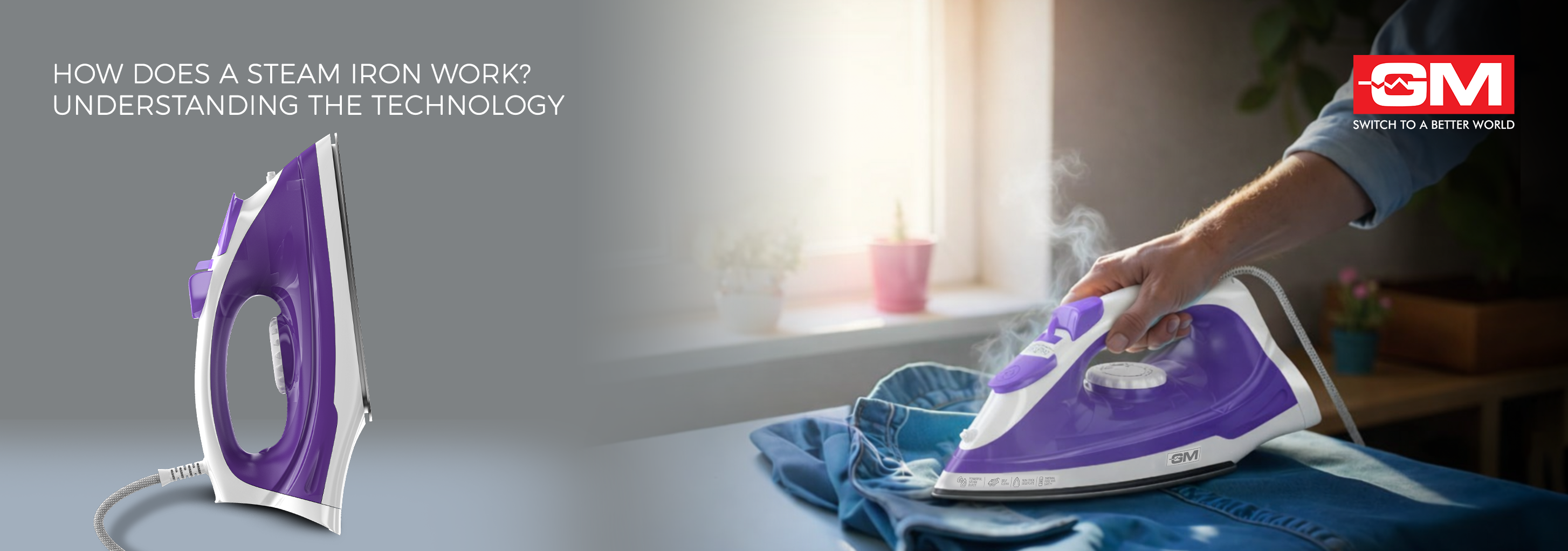
Whether you're preparing crisp office wear for Monday morning or perfecting a silk saree for a family wedding, a reliable iron makes all the difference. Yet most of us use our irons daily without truly understanding how they work or how to maximise their potential. Learning how a steam iron works reveals a fascinating combination of heat, moisture, and pressure that protects your fabrics while delivering professional quality results. This knowledge helps you choose the right iron and use it more effectively for every garment in your wardrobe.
Key Takeaways
-
Steam irons use heated water vapour to relax fabric fibers, removing wrinkles faster than dry heat alone
-
The process involves water expanding 1,600 times into steam before exiting through the soleplate vents
-
Higher wattage (1250W) ensures consistent steam output, especially during voltage fluctuations
-
Steam irons work safely on delicate fabrics like silk and chiffon at lower temperatures
-
Modern features like vertical steam and self-cleaning extend versatility and lifespan
What Is a Steam Iron?
So what is a steam iron exactly? It's an evolution of the traditional flat iron that uses superheated water vapor to remove wrinkles more efficiently than heat alone. While conventional dry irons rely solely on their weight, heat, and pressure to flatten fabric fibers, steam irons add moisture to the equation for faster, gentler wrinkle removal.
The key distinction lies in how steam penetrates fabric. When you understand what a steam iron is capable of, you realize it works with your clothes rather than against them. The moisture relaxes stubborn fibers that would otherwise require excessive heat and pressure. This reduces the risk of scorching delicate materials like chiffon and georgette while achieving better results on heavy fabrics like denim and linen, which is essential for Indian wardrobes that include everything from cotton kurtas to embroidered lehengas.
The Science Behind the Steam: Working Principle
The steam iron's working principle combines simple physics with clever engineering. Inside every steam iron, a powerful heating element warms both the metal soleplate and a separate water chamber simultaneously. This dual heating system is what makes steam generation possible.
Here's the steam iron working principle in action: water from the tank drips into a superheated vapourising chamber where it instantly expands to approximately 1,600 times its liquid volume, transforming into pressurised steam. This steam then exits through precision-engineered vents in the soleplate, penetrating directly into fabric fibers.
The effect on your clothes is remarkable. Moisture relaxes the polymer bonds within cotton, linen, and synthetic fibers, essentially making them pliable and easier to reshape. The heat then sets these bonds in their new, smooth position while the soleplate's weight and pressure lock everything in place. This steam iron's working principle explains why steam technology achieves better results with less effort than dry alternatives.
Also Read: How to Use a Steam Iron Safely and Effectively
Key Components of a Modern Steam Iron
Understanding how a steam iron works requires knowing its essential components:
-
Water Tank: Stores water for steam generation. Larger capacities (around 160ml) mean longer ironing sessions without refilling, particularly useful during festival seasons when you're ironing multiple outfits.
-
Heating Element: The heart of the iron, typically rated between 1000W and 1250W. Higher wattage means faster heat-up times and more consistent steam output, important for handling India's voltage fluctuations.
-
Soleplate: The contact surface that glides across fabric. The G-Swift Steam Iron features a PTFE non-stick soleplate that ensures smooth movement without snagging delicate materials.
-
Steam Vents: Precision channels that distribute steam evenly across the ironing surface for consistent wrinkle removal.
-
Thermostat: Regulates temperature based on fabric settings, preventing overheating.
-
Thermal Fuse: A critical ISI-standard safety component that cuts power if the thermostat fails, protecting both you and your garments.
Steam Iron vs. Dry Iron: What's the Difference?
When comparing these two ironing methods, the differences become clear in everyday use. Here's a quick comparison:
| Feature | Steam Iron | Dry Iron |
| Wrinkle Removal | Faster with moisture penetration | Requires more passes |
| Fabric Safety | Lower scorch risk | Higher heat needed |
| Versatility | Can work dry or with steam | Heat and pressure only |
| Best For | All fabric types | Basic cotton ironing |
Steam irons remove wrinkles significantly faster because moisture does half the work, relaxing fibers before heat and pressure finish the job. This is especially valuable in India's humid climate, where clothes can develop stubborn creases quickly.
Who benefits most from a steam iron? Households with diverse wardrobes, silk sarees, linen shirts, synthetic blends, and heavy cotton gain the most value. If you frequently iron delicate fabrics or want faster results with less effort, a steam iron is the practical upgrade.
GM Modular offers both options in its range of home appliances. The Evon and Ferro dry irons provide reliable, heavyweight ironing for basic needs, while the G-Swift Steam Iron represents the advanced choice for households handling diverse fabric types.
Also Read: Steam Iron vs Dry Iron: A Detailed Comparison
Advanced Features That Enhance Performance
Modern steam irons go beyond basic wrinkle removal with specialised functions that address real-world ironing challenges. Here's how these features work in practice:
-
Vertical Steam allows you to iron hanging garments like curtains, blazers, and sherwanis without a board. The G-Swift Steam Iron includes this function, making quick touch-ups possible even when you're rushing before an event.
-
Steam Burst delivers a concentrated blast of vapour for stubborn creases in heavy fabrics like denim and linen. This feature proves invaluable for collar creases, pleats, and the stubborn wrinkles that form on starched cotton shirts.
-
Self-Cleaning technology prevents calcium and mineral buildup inside the steam chamber. In areas with hard water, common across many Indian cities, mineral deposits can clog steam vents and reduce performance over time. The self-cleaning function flushes these deposits, maintaining optimal steam output throughout the iron's lifespan.
Safety First: Using Your Steam Iron Correctly
Safe operation starts with understanding your iron's protective systems. The thermostat maintains your selected temperature, while the thermal fuse acts as a failsafe, automatically cutting power if internal temperatures exceed safe limits. GM Modular's G-Swift features this dual protection system for peace of mind.
Follow these essential safety practices:
-
Always unplug your iron before filling or emptying the water tank.
-
Never overfill beyond the maximum line, as excess water can leak through steam vents.
-
Allow your iron to cool completely before storing.
-
Always rest it on its heel when not actively ironing.
-
Store in a dry place away from children's reach.
For high-wattage appliances, we recommend consulting a qualified electrician if you have concerns about your home's electrical capacity.
Understanding how a steam iron works reveals the elegant science behind wrinkle-free clothes: heat, moisture, and pressure working together to relax and reshape fabric fibers safely. Whether you're refreshing a cotton kurta for the office or smoothing a silk saree for Diwali celebrations, steam technology delivers professional results at home. GM Modular's G-Swift Steam Iron combines this technology with advanced features like vertical steam and self-cleaning for modern garment care needs. Explore GM Modular's G-Swift Steam Iron range and switch to a better world of wrinkle-free perfection.
Frequently Asked Questions
1. How does a steam iron work on stubborn wrinkles?
Steam penetrates fabric fibers and relaxes their polymer bonds, making them pliable. The heat then sets these bonds in a smooth position while the soleplate's pressure flattens the surface. This combination removes even stubborn creases more effectively than dry heat alone.
2. Can I use a steam iron without water as a dry iron?
Yes, most steam irons function as dry irons when the water tank is empty. Simply select your desired temperature and iron normally without activating the steam function.
3. What is the benefit of a higher wattage steam iron?
Higher wattage (like the G-Swift's 1250W) means faster heating and more consistent steam production. The iron reaches optimal temperature quickly and maintains it throughout your session.
4. Why is my steam iron leaking water?
Leaking typically occurs due to three reasons: the iron hasn't reached proper operating temperature before steaming, the tank is overfilled, or the temperature setting is too low for the steam function.
5. Do I need distilled water for my steam iron?
While tap water works in most areas, distilled or filtered water prevents mineral buildup that can clog steam vents over time. If your area has hard water, using purified water or an iron with self-cleaning capability helps maintain long-term performance.
Related Blogs
Bladeless Fan Buying Guide: 10 Checks | GM Modular
Bladeless Fan Buying Guide: 10 Things to Check Before You Buy A bladeless fan looks like the obvious upgrade. No spinning blades, a slim tower, a quiet hum, and a price that hints it must be the better choice. But the word “bladeless” on
Read More
What Is a GaN Charger? A Simple Guide
What Is a GaN Charger? Everything You Need to Know You have probably used gallium nitride for years without knowing it. Before it reached the charger on your wall, this material lit up the first white LEDs, powered blue lasers, and read the discs in
Read More
GM Artic Air 1: 3-in-1 Bladeless Tower Fan
Why the GM Artic Air 1 Is the Ultimate 3-in-1 Appliance for Every Season Picture one slim tower in the corner of your living room. In May, it cools you through a brutal afternoon. In August, it clears the damp, stale air the monsoon leaves beh
Read More
Wireless Charging vs Wired Charging: Which Is Faster?
Wireless Charging vs Wired Charging: Which Is Faster? If your phone is at 10% and you have twenty minutes before heading out, which charger should you grab: the cable or the pad? Wireless charging is everywhere now, yet most of us still reach for a
Read More