Blog
Different Types of Light Bulbs & How to Choose the Right One?
Updated on Jan 2026
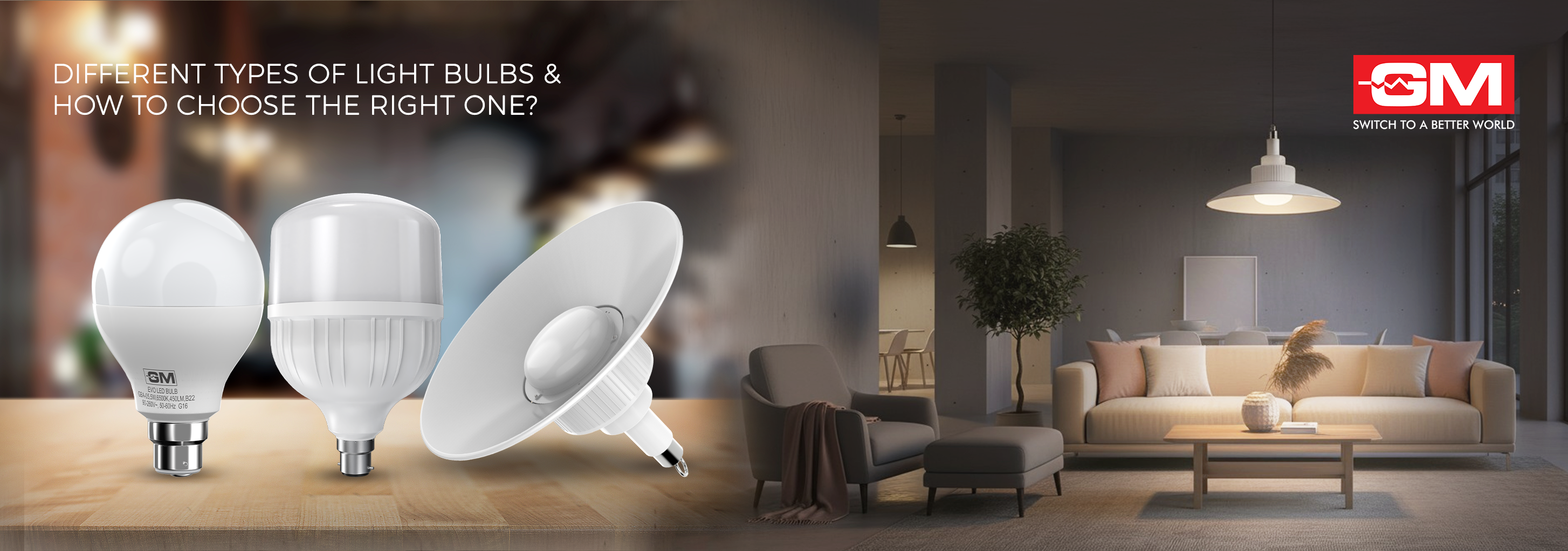
Lighting does much more than just brightening up a room. It sets the mood, enhances functionality, adds warmth, and completely shifts the aesthetic of any space. And while lighting design is important, it all starts with choosing the right bulb. Today, consumers have access to several types of bulb options, from traditional incandescent bulbs to modern smart bulbs, from energy-efficient light-emitting diodes to versatile fluorescent tubes. And with so many choices available, it can be difficult to decide which one works best for your home, office, or commercial space.
Modern lighting is no longer just about wattage or brightness. It involves understanding energy use, lifespan, colour temperature, and overall performance. If you’re upgrading your home lighting or planning to set up a new space, making the right choice can add comfort and reduce long-term energy costs.
Here is a detailed list of different types of bulbs and their key features, to help you understand how to select the perfect one for every space.
Different Types of Light Bulbs
Understanding the different types of bulb options is the first step toward choosing wisely. Below are the most common categories, each offering unique benefits depending on your usage, budget, and sustainability goals.
1. Incandescent Bulbs
Incandescent bulbs are the oldest and most traditional lighting option. They work by heating a filament inside the bulb until it glows. While they offer warm, comforting light, they are not energy-efficient by modern standards and generate a significant amount of heat.
These bulbs create a nostalgic ambience that some people still prefer, especially in vintage-style fixtures. However, they have a short lifespan, often around 1,000 hours, and consume more electricity compared to modern types of LED bulbs. Overall, incandescent bulbs are best suited for spaces where ambience matters more than efficiency, and for users willing to replace bulbs more frequently.
2. Halogen Bulbs
A variation of incandescent lighting, halogen bulbs use halogen gas to boost efficiency and brightness. They typically produce a whiter and more natural-looking light, making them popular for task lighting, spotlighting, and accent lighting.
Halogen bulbs heat up quickly and operate at higher temperatures, so they must be handled with care. They last longer than traditional incandescent bulbs but still fall short when compared to LEDs and CFLs. They deliver excellent colour accuracy and are often preferred in display lighting, vehicle headlights, and reading lamps where clarity is crucial.
3. Compact Fluorescent Lamps (CFLs)
Compact fluorescent lamps, or CFLs, are a more energy-efficient alternative to incandescent bulbs. They use a gas-filled tube and a small amount of mercury vapour to produce light. This makes them consume nearly 70–80% less energy while lasting significantly longer than incandescent bulbs.
CFLs come in various shapes, sizes, and brightness levels. They are ideal for general home lighting, especially in rooms that require lighting for long periods. However, since they contain mercury, proper disposal is essential. While they take a few seconds to reach full brightness, their energy savings make them a popular choice for budget-friendly households.
4. Fluorescent Tubes
Fluorescent tubes are widely used in offices, schools, commercial buildings, and kitchens. They provide bright, uniform illumination across a large area. Thanks to their long lifespan and low operating cost, they are ideal for high-use spaces.
These tubes use a similar technology to CFLs but are designed for broader coverage. Available in various lengths and colour temperatures, fluorescent tubes offer versatile lighting solutions for large indoor spaces. Modern LED tube light alternatives are becoming more common due to better efficiency, mercury-free construction, and lower environmental impact.
Curious why LED tube lights are a smart choice? Explore the advantages that make them energy-efficient and long-lasting.
5. Light Emitting Diodes (LEDs)
Light-emitting diodes, or LEDs, represent the future of home and commercial lighting. They are the most energy-efficient and durable option available today. LEDs consume far less power, produce minimal heat, and last up to 25,000–50,000 hours, making them incredibly cost-effective.
Available in multiple shapes, sizes, brightness levels, and colour temperatures, LEDs can adapt to any setting, from cosy living rooms to bright workspaces. Modern types of LED bulb options also include dimmable variants and smart-connected versions. With high energy efficiency and low maintenance, LEDs are the go-to choice for eco-conscious and modern households.
6. Smart Bulbs
Smart bulbs bring convenience and personalisation to a whole new level. With features like app control, voice control, scheduling, dimming, and colour-changing options, smart bulbs transform lighting into an experience.
These bulbs are usually LED-based, which means they combine the best of efficiency with advanced automation. Whether you want warm mood lighting in the evening, bright white light for work, or RGB colours for a party, smart bulbs give you complete control with just your voice or smartphone. They are ideal for modern homes and users who enjoy tech-driven living.
How to Choose the Right Light Bulb?
Choosing the right bulb goes beyond simply picking what fits the socket. It's about matching functionality, ambience, and efficiency with the space and purpose. Here is a complete guide to help you decide:
1. Understand Your Lighting Needs
Start with the purpose of the space. Work areas require cool, bright light for concentration, while living rooms or bedrooms usually benefit from warm, softer tones. Task-heavy zones like kitchens or study tables need focused lighting, whereas hallways may need uniform illumination.
2. Compare Energy Efficiency
If saving energy is a priority, LEDs are your best bet. They consume the least power and last the longest. CFLs also offer decent efficiency, but types of LED bulb options dominate today due to better performance and sustainability.
3. Choose the Right Brightness (Lumens)
Bulbs are no longer defined by wattage for brightness; lumens matter. Higher lumens mean brighter light. For instance, a 10W LED can easily match the brightness of a 60W incandescent bulb. Always check lumen ratings to ensure proper illumination.
4. Pick the Perfect Colour Temperature
Colour temperature determines how light feels.
-
Warm White (2700–3000K) brings a cosy and ambient vibe.
-
Cool White (3500–4100K) makes the space look balanced and functional.
-
Daylight (5000–6500K) looks bright and makes the space look positively energising.
Thus, it is important to select based on the environment you want to create.
5. Look at the Lifespan & Maintenance Needs
LEDs last the longest, often requiring replacement once in several years. CFLs offer a good lifespan, while incandescent and halogen bulbs need frequent changes. Choose according to how much maintenance you prefer.
6. Consider Smart Features
If convenience matters, go for smart bulbs. They allow remote control, scheduling, mood settings, and voice activation, perfect for modern smart homes.
Choosing from the many types of light bulb options available today can feel overwhelming, but understanding how each one works makes the process easier and smarter. From traditional incandescent bulbs to efficient CFLs, long-lasting LEDs, or convenient smart bulbs, each type brings a unique benefit depending on your space and lighting goals.
As you upgrade your home, look at more than just wattage; consider ambience, energy savings, and long-term value. GM Modular offers reliable, high-performance LED and smart lighting solutions designed for Indian homes. These solutions are equipped with advanced features, durability, and efficiency, making them a strong choice for homeowners who want quality lighting without compromise.
By exploring the different types of bulb categories and assessing your lifestyle needs, you can create a well-lit environment that looks beautiful, feels comfortable, and works efficiently for years to come.
Also Read: Types of LED Lights You Should Know Before Buying
Frequently Asked Questions - Different Types of Light Bulbs
1. What are the different types of light bulbs available today?
Common types include incandescent bulbs, halogen bulbs, CFLs, fluorescent tubes, LEDs, and smart bulbs. Each varies in efficiency, brightness, and lifespan.
2. Are LED bulbs more efficient than CFLs?
Yes, LEDs consume less energy, generate less heat, and last significantly longer than CFLs, making them a more cost-effective option in the long run.
3. How do I choose the right bulb for my home?
Consider brightness (lumens), colour temperature, energy efficiency, and the purpose of the space. LEDs are generally ideal for most home settings.
4. Do smart bulbs save energy?
Most smart bulbs are LED-based, which means they are highly energy-efficient. They also allow features like scheduling, which can reduce unnecessary usage.
Related Blogs
Bladeless Fan Buying Guide: 10 Checks | GM Modular
Bladeless Fan Buying Guide: 10 Things to Check Before You Buy A bladeless fan looks like the obvious upgrade. No spinning blades, a slim tower, a quiet hum, and a price that hints it must be the better choice. But the word “bladeless” on
Read More
What Is a GaN Charger? A Simple Guide
What Is a GaN Charger? Everything You Need to Know You have probably used gallium nitride for years without knowing it. Before it reached the charger on your wall, this material lit up the first white LEDs, powered blue lasers, and read the discs in
Read More
GM Artic Air 1: 3-in-1 Bladeless Tower Fan
Why the GM Artic Air 1 Is the Ultimate 3-in-1 Appliance for Every Season Picture one slim tower in the corner of your living room. In May, it cools you through a brutal afternoon. In August, it clears the damp, stale air the monsoon leaves beh
Read More
Wireless Charging vs Wired Charging: Which Is Faster?
Wireless Charging vs Wired Charging: Which Is Faster? If your phone is at 10% and you have twenty minutes before heading out, which charger should you grab: the cable or the pad? Wireless charging is everywhere now, yet most of us still reach for a
Read More