Blog
Iron Wattage Guide: How Much Energy Does an Iron Consume?
Updated on Dec 2025
When it comes to household appliances, the iron is one of the most commonly used devices for everyday chores. Whether you iron in short bursts or save it for the weekend, knowing your iron’s wattage is a handy piece of information. It offers helpful insight into how much energy you use and how effectively your clothes get ironed. This simple knowledge can help save electricity and lower your bills without compromising on performance.
Let’s break down how iron wattage works, what affects energy consumption, and how to choose the right model for your needs.
What is Iron Wattage and Why It Matters
The term iron wattage refers to the power an iron consumes when operating. The wattage directly impacts how quickly the iron heats up and how effectively it handles wrinkles. A high-wattage iron tends to deliver faster results but also consumes more energy.
In simple terms, wattage equals heat output. A basic clothes iron's wattage generally ranges between 800 and 2000 watts, depending on the model and its features. Domestic irons usually fall around the average iron wattage of 1200 to 1600 watts, while professional or steam irons might go even higher.
Typical Iron Wattage Range
To understand how much wattage an iron consumes, it’s essential to consider the type of iron you use.
-
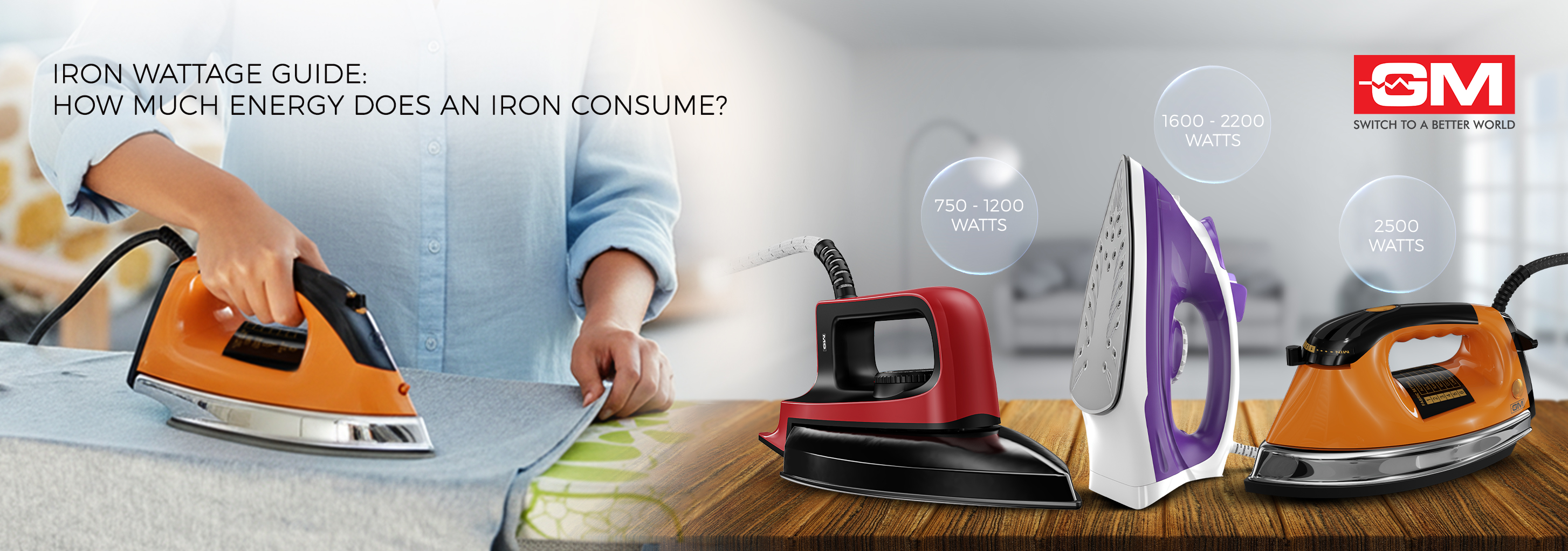
Basic dry iron: These are compact, lightweight, and usually have an iron press wattage of 750 to 1200 watts. They are energy-efficient and best suited for simple fabrics like cotton, linen, or polyester.
-
Steam iron: This type adds steam functionality for stubborn wrinkles. The steam iron's power consumption typically ranges between 1600 and 2200 watts.
-
Professional or heavy-duty iron: Designed for commercial use, these models can reach 2500 watts or more, providing intense heat for thick fabrics or bulk ironing.
So, while your clothes iron wattage may vary, your choice should balance performance with energy efficiency.
Calculating the Iron Power Consumption
To measure iron power consumption, you first need to know the iron’s wattage and how long you use it.
The formula for calculating the electricity consumption of any appliance is:
Power (Watts) × Time (Hours) / 1000 = Units (kWh)
For example, suppose your iron has a 1000-watt electricity consumption rating and you use it for one hour.
1000 W × 1 hour / 1000 = 1 kWh
This means your iron uses one unit of electricity for every hour of continuous use. But since most irons are operated intermittently, real usage is usually less. The thermostat turns the iron’s heating element on and off periodically, lowering the overall electricity consumption of the iron in a typical session.
Factors Affecting Iron Energy Use
Several factors influence electric iron power consumption, including:
-
Temperature setting: Higher heat settings demand more energy as the iron must maintain a consistent temperature.
-
Type of fabrics: Thicker fabrics like denim or linen require more heat, increasing the electric iron watt usage.
-
Ironing habits: Leaving the iron on between garments or multitasking while it’s plugged in results in unnecessary energy consumption.
- Iron design: Advanced models from brands like GM Modular ensure optimised heating distribution, reducing overall power use while maintaining high performance.
Understanding these aspects can help you manage how much wattage the iron consumes across different ironing sessions.
Comparing Iron Wattage Levels
Choosing the right iron wattage depends on your lifestyle and ironing frequency.
-
Low wattage (800–1200 W): Suitable for minimal users or light fabrics. Budget-friendly and energy-efficient, these irons are simple to operate.
-
Medium wattage (1300–1600 W): Ideal for families with moderate ironing needs. The average iron wattage in this range provides a good balance between power and consumption.
-
High wattage (1800–2200 W): Perfect for those who iron daily or deal with heavy materials. These irons heat up quickly, deliver better wrinkle removal, and offer consistent steam flow.
By understanding the appropriate iron press watt, you can make an informed purchase that fits your energy goals and routine.
How to Reduce Iron Power Consumption
You can easily lower your electric iron's power consumption by following a few practical steps:
-
Sort fabrics before ironing: Start with delicate fabrics at lower settings and move up gradually. This ensures efficient heat use.
-
Iron in bulk: Heating the iron repeatedly across multiple short sessions increases energy wastage. A single extended session is more efficient.
-
Use the correct temperature: Avoid setting the iron too high unnecessarily, as that directly increases iron power consumption.
-
Turn off between breaks: Unplugging the iron even for short intervals saves energy without affecting performance.
-
Opt for energy-saving irons: Modern irons with smart temperature controls and automatic shutoff functions minimise electric iron power consumption.
Most electric irons use between 750 and 2400 watts. Basic models use 750 to 1200 watts, while steam irons can use up to 2400 watts. Irons with higher wattage heat up faster and work well on heavy fabrics, but they also use more electricity. GM Modular's electrical solutions are made to be energy-efficient, which helps families use their power wisely and safely.
The Importance of Brand and Build Quality
While wattage plays a major role, build quality is equally critical. Low-quality irons may have uneven heat distribution, leading to poor results despite high wattage. When choosing your iron, prioritise trusted brands that use superior heating technology and durable materials.
A 1000-watt iron electricity consumption model from a reliable manufacturer can outperform a cheaper 1500-watt model when equipped with advanced thermal controls. GM Modular’s products are built for consistent electrical safety, bringing convenience without compromising efficiency.
Steam Iron vs. Dry Iron: Power Comparison
The main difference between steam and dry irons lies in their steam iron power consumption and design. Steam irons have integrated water tanks and steam vents, which add a heating component. This increases the total iron wattage, making them slightly more energy-intensive. However, they deliver faster and better results for thick or wrinkled fabrics.
Dry irons, on the other hand, require manual sprinkling of water and work best for lighter fabrics. Their simpler design leads to lower electricity consumption of iron, which benefits users who iron occasionally or prefer lightweight options.
Understanding Wattage and Energy Costs
Electricity costs vary by region, but you can estimate the expense using your iron’s wattage. Suppose your average iron wattage is 1500 watts and your electricity rate is Rs 8 per unit. Ironing for 30 minutes uses roughly 0.75 units, costing Rs 6 per session. Over time, these small savings add up, especially in larger households.
Iron Smarter, Save Energy, Live Better
Your iron wattage defines both performance and efficiency. By knowing the electric iron watt, monitoring use time, and following simple energy-saving practices, you can manage household electricity more effectively. Whether it’s understanding iron power consumption or finding the right iron press watt, informed decisions ensure better results and reduced waste. GM Modular encourages every household to use appliances that combine innovation, safety, and energy efficiency, because smart homes start with smart choices.
Also Read: Steam Iron vs Dry Iron: Which One Should You Buy?
Frequently Asked Questions
1. What is the ideal iron wattage for home use?
An average iron wattage between 1200 and 1600 watts is ideal for most households as it balances efficiency with cost.
2. How can I calculate the electricity consumption of iron?
Multiply the iron wattage by the hours of use and divide by 1000. This gives you the units consumed (kWh).
3. Does a steam iron consume more power?
Yes, steam iron power consumption is higher compared to dry irons, but it offers superior performance for thick fabrics.
4. Does the thermostat help reduce electric iron power consumption?
Absolutely. The thermostat regulates temperature and cycles power on and off, reducing the overall electricity consumption of the iron.
5. Can a 1000-watt iron electricity consumption model deliver good results?
Yes, if designed with efficient heating systems, a 1000-watt model can still provide consistent results and save energy at the same time.
Related Blogs
Bladeless Fan Buying Guide: 10 Checks | GM Modular
Bladeless Fan Buying Guide: 10 Things to Check Before You Buy A bladeless fan looks like the obvious upgrade. No spinning blades, a slim tower, a quiet hum, and a price that hints it must be the better choice. But the word “bladeless” on
Read More
What Is a GaN Charger? A Simple Guide
What Is a GaN Charger? Everything You Need to Know You have probably used gallium nitride for years without knowing it. Before it reached the charger on your wall, this material lit up the first white LEDs, powered blue lasers, and read the discs in
Read More
GM Artic Air 1: 3-in-1 Bladeless Tower Fan
Why the GM Artic Air 1 Is the Ultimate 3-in-1 Appliance for Every Season Picture one slim tower in the corner of your living room. In May, it cools you through a brutal afternoon. In August, it clears the damp, stale air the monsoon leaves beh
Read More
Wireless Charging vs Wired Charging: Which Is Faster?
Wireless Charging vs Wired Charging: Which Is Faster? If your phone is at 10% and you have twenty minutes before heading out, which charger should you grab: the cable or the pad? Wireless charging is everywhere now, yet most of us still reach for a
Read More