Blog
Who Invented the Ceiling Fan? A Journey Through Time
Updated on Dec 2025
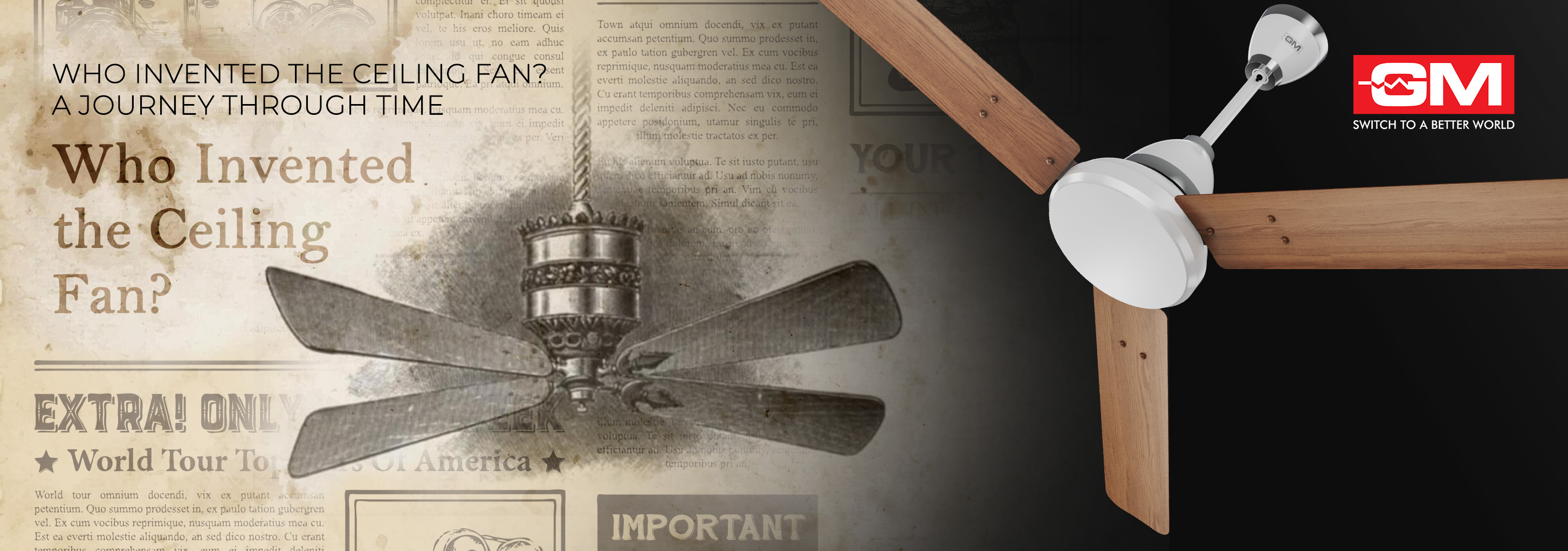
Ceiling fans are a quiet yet transformative part of life at home, offering comfort, style, and energy savings all year round. But not many of us know about the invention of the ceiling fan and how this humble device revolutionised modern living. To appreciate the fan as more than just a spinning fixture, let’s embark on a journey through the history of ceiling fans, the story of its inventor, and the epochal moments marking its rise.
The Birth of Air Movement: Before the Invention of the Ceiling Fan
Long before the mechanical fan came into existence, civilisations had unique ways to circulate air. Servants in ancient Egypt and India swung hand-made punkahs made of palm leaves to make a cool breeze. However, it wasn't until the late 1800s that the ceiling fan was officially invented as a household item.
Who Invented the Ceiling Fan?
To answer the vital question, “Who invented the ceiling fan?” we must sift through innovations in both technology and design. Philip Diehl, a German-American engineer, is widely credited as the pioneering inventor. In 1882, Diehl adapted a sewing machine motor to power fan blades mounted on the ceiling, marking a landmark moment in ceiling fan history. His invention offered a practical, energy-efficient way to cool rooms and set the foundation for the ceiling fans we see in homes today.
When Was the Ceiling Fan Invented?
So, when was the ceiling fan invented? The golden year was 1882. Diehl’s prototype was soon patented, drawing widespread attention and adoption across American homes and businesses. By connecting a compact motor to ceiling-mounted blades, Diehl proved how technology could reimagine indoor comfort. Just a few years after the invention of the ceiling fan, public venues, factories, and eventually residences began integrating these fans as a staple fixture.
Ceiling Fan History: From Mechanical to Electric
Tracing the ceiling fan's history, we see notable phases of transformation. The earliest ceiling fans didn’t use electricity; instead, many models ran on systems of belts connected to water-powered turbines. Such arrangements dominated in southern American states, where cooling solutions were in high demand. However, belt-driven ceiling fans posed maintenance challenges.
Once the invention of the ceiling fan progressed into fully electric models, reliability and accessibility soared. Diehl’s electric motor became a turning point, enabling widespread production and lower prices. Between 1900 and 1930, manufacturers like Hunter and Emerson Electric expanded on Diehl’s concept, launching more robust, safe, and aesthetically refined fans for households.
The Evolution in Design and Function
Ceiling fan history isn’t just about mechanical innovation; it’s equally about style. Early designs were utilitarian, intended to serve a practical purpose, but by the 20th century, fans became a statement piece. Artistic flourishes, varied blade shapes, and the use of decorative metals allowed fans to blend seamlessly with evolving home décor trends.
Modern advancements in the invention of ceiling fans have focused on energy efficiency, quiet operation, and smart controls. Today’s ceiling fans feature brushless DC motors, LED lighting integration, and remote-controlled functions, showcasing just how far the invention of the ceiling fan has come.
To explore different fan styles and where they work best, check out Types of Ceiling Fans: Features, Benefits, and Best Uses.
Ceiling Fans in India: Adaptation and Popularity
While Diehl’s work is foundational, ceiling fans truly became a cultural icon in hot climates. In India, the need for effective air circulation was immense. As power infrastructure developed, local manufacturers began innovating upon the invention of the ceiling fan, customising blade shapes and motor sizes for Indian homes.
By the mid-20th century, ceiling fans were a staple in Indian architecture. The adoption of fans was accelerated by government schemes promoting electrification and home modernisation, making the invention of the ceiling fan an essential household technology. Today, brands like GM Modular continue to push the boundaries with smart, energy-efficient models suited for India’s unique climate.
Sustainability and Smart Innovations: The Latest Chapter
Ceiling fan history shows constant evolution. Contemporary models prioritise sustainability, using recyclable materials and highly efficient motors. GM Modular’s latest collections, for example, integrate smart technology, app-based controls, and minimalist design, reflecting how the invention of the ceiling fan keeps up with changing lifestyles.
Recent innovations highlight blade geometry for optimal airflow, and regulatory standards push manufacturers to improve energy consumption further. The invention of the ceiling fan has essentially transitioned from simple cooling to redefining luxury and eco-friendliness indoors.
The Universal Comfort: Why the Invention of the Ceiling Fan Still Matters
Despite competition from air conditioners and air purifiers, the invention of the ceiling fan stands tall for its eco-friendliness, affordability, and silent comfort. Ceiling fan history proves its enduring value in both urban apartments and rural homes. It’s the unsung hero, consistently offering comfort, familiarity, and a sense of home. According to a 2024 report by the Bureau of Energy Efficiency (BEE), over 90 million ceiling fans are sold annually in India, with nearly 40 per cent of households upgrading to energy-efficient models in the last five years. This shift reflects growing awareness of sustainability, proving that the invention of the ceiling fan continues to evolve with modern environmental priorities. Today’s fans consume up to 50 per cent less electricity than traditional models, which not only supports national energy conservation goals but also helps homeowners reduce annual power bills significantly.
Also Read: Different Parts of Ceiling Fans: Names & Functions.
Frequently Asked Questions
1. What inspired the invention of the ceiling fan?
The invention of the ceiling fan was born out of a need for effective indoor cooling. Innovations in small electric motors and creative adaptation by inventors like Philip Diehl made ceiling fans a reality.
2. Who invented the ceiling fan, and why did it matter?
Philip Diehl is considered the father of ceiling fans. His work matters because it introduced an energy-efficient, practical solution for domestic comfort, reshaping how people experienced indoor climates.
3. When was the ceiling fan invented, and how did it impact society?
Ceiling fans were invented in 1882. Their introduction transformed homes, workplaces, and public spaces by providing accessible cooling solutions before air conditioners became mainstream.
4. How has ceiling fan history influenced today’s models?
Ceiling fan history has guided manufacturers to prioritise design, efficiency, and smart features. Each advancement builds upon the invention of the ceiling fan to deliver improved airflow, energy savings, and user control.
5. What makes modern ceiling fans different?
Today’s ceiling fans leverage technology like brushless DC motors, remote controls, and durable materials. Modern design ensures that the invention of the ceiling fan continues to enhance comfort and style in every space.
Related Blogs

Bladeless Fan Buying Guide: 10 Checks | GM Modular
Bladeless Fan Buying Guide: 10 Things to Check Before You Buy A bladeless fan looks like the obvious upgrade. No spinning blades, a slim tower, a quiet hum, and a price that hints it must be the better choice. But the word “bladeless” on
Read More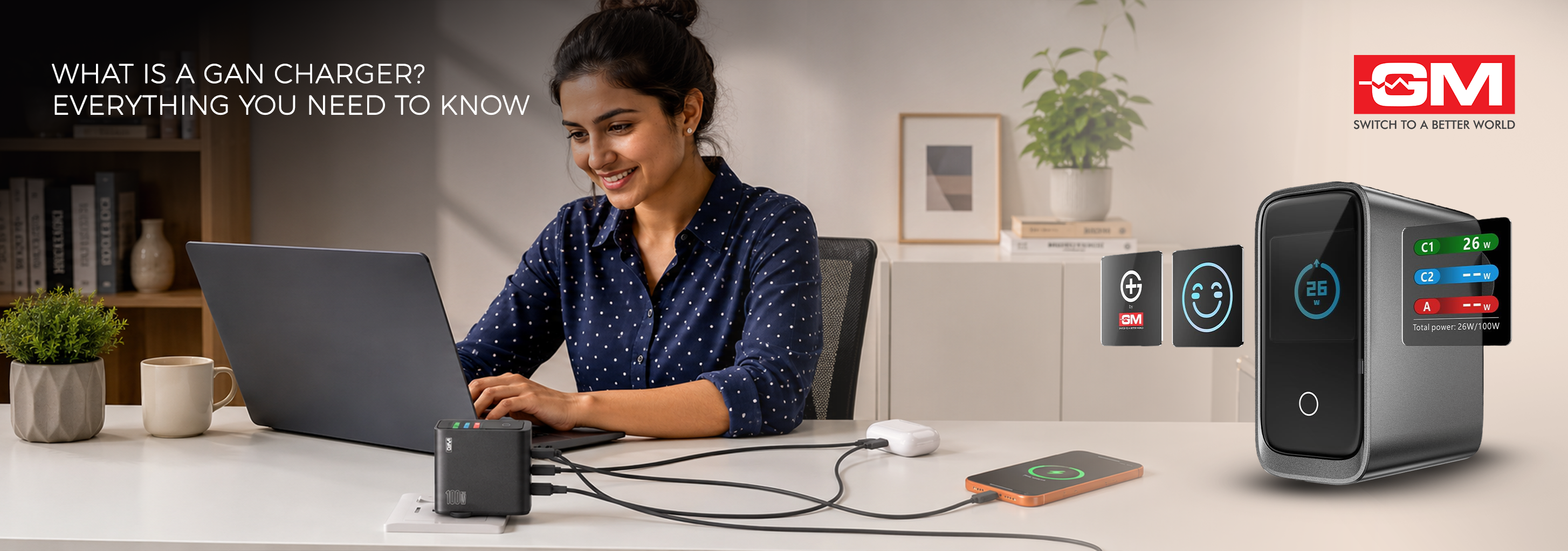
What Is a GaN Charger? A Simple Guide
What Is a GaN Charger? Everything You Need to Know You have probably used gallium nitride for years without knowing it. Before it reached the charger on your wall, this material lit up the first white LEDs, powered blue lasers, and read the discs in
Read More
GM Artic Air 1: 3-in-1 Bladeless Tower Fan
Why the GM Artic Air 1 Is the Ultimate 3-in-1 Appliance for Every Season Picture one slim tower in the corner of your living room. In May, it cools you through a brutal afternoon. In August, it clears the damp, stale air the monsoon leaves beh
Read More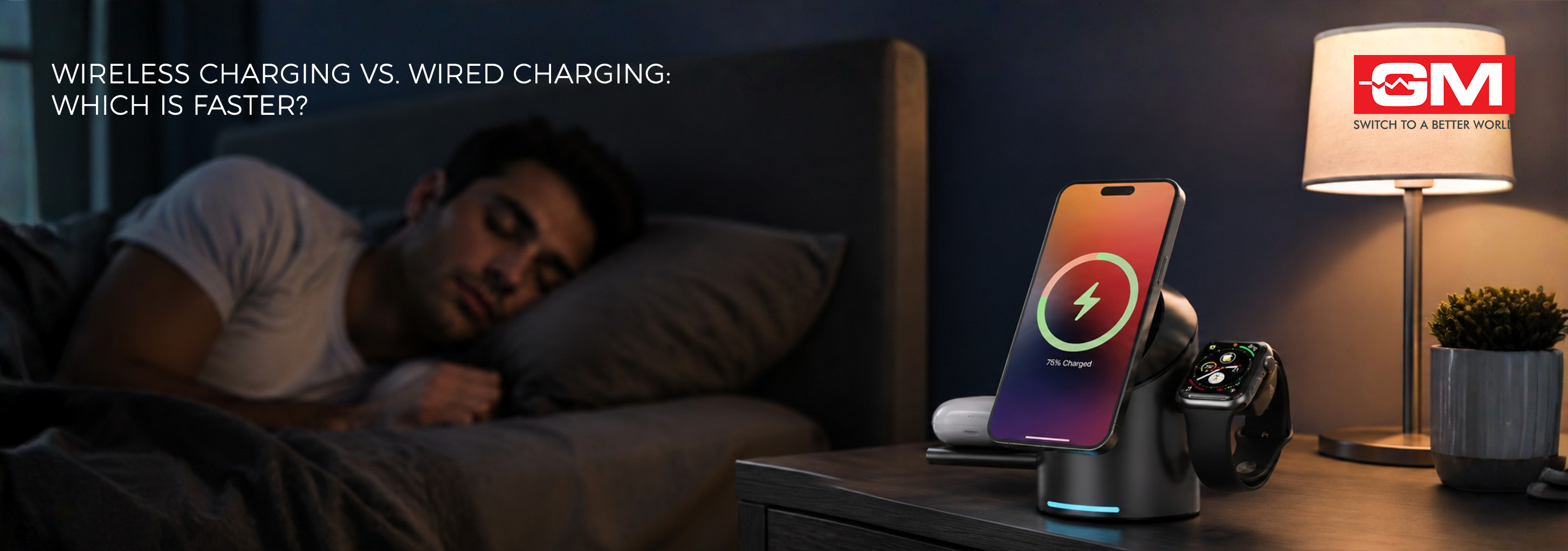
Wireless Charging vs Wired Charging: Which Is Faster?
Wireless Charging vs Wired Charging: Which Is Faster? If your phone is at 10% and you have twenty minutes before heading out, which charger should you grab: the cable or the pad? Wireless charging is everywhere now, yet most of us still reach for a
Read More